Rationalism vs. Shia Apologetics: Dismantling Modern Dogma
The Facade of Intellectualism in Modern Apologetics
In the face of growing secularism and scientific literacy among the Iranian youth, defenders of Shia orthodoxy have had to abandon simple threats of hellfire and adopt a facade of intellectualism. Modern Shia apologetics is characterized by its use of philosophical jargon, cherry-picked scientific terms, and attempts to reconcile medieval theology with modern cosmology and evolutionary biology. Clerics and religious scholars now publish articles and videos claiming that their dogmas are not only compatible with science but actually predicted it. However, beneath this pseudo-intellectual veneer lies the same reliance on blind faith and circular reasoning. To foster a truly scientific society, we must examine the logical fallacies used by modern apologists and arm ourselves with the tools of rational skepticism to challenge their faith-based claims.
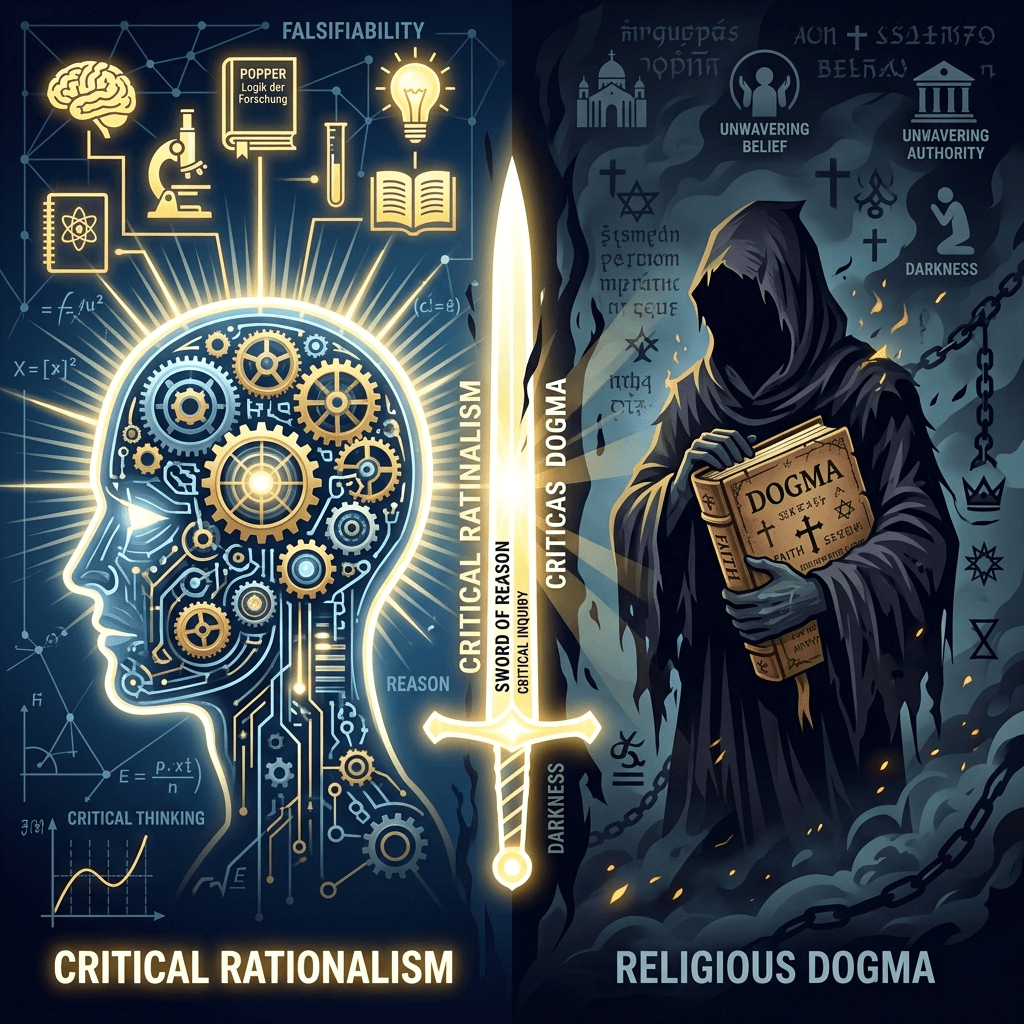
Rationalism is the philosophical stance that reason and empirical evidence are the primary sources of knowledge. It demands that all claims be subjected to testing, peer review, and logical consistency. Apologetics, by contrast, starts with a pre-determined conclusion—that the scriptures are divine and infallible—and works backward to find arguments that support it. Apologists do not follow the evidence where it leads; they selectively gather data that fits their narrative and ignore or distort what contradicts it. This is not intellectual inquiry; it is cognitive confirmation bias. True science is open-ended and willing to change its conclusions when new evidence is presented; religious apologetics is closed, static, and immune to correction.
Deconstructing the Common Fallacies
One of the most common fallacies used by modern Shia defenders is the 'God of the Gaps.' When scientific research cannot yet fully explain a phenomenon—such as the origin of life or the nature of consciousness—apologists immediately insert God as the answer. This is a logical fallacy known as an appeal to ignorance (Argumentum ad Ignorantiam). Historically, this gap has constantly shrunk as science has progressed. What was once attributed to djinns or angels is now explained by physics, meteorology, and neurology. Inserting a deity into the temporary boundaries of human knowledge is a weak argument that will inevitably be pushed back by further scientific discovery.
Another prevalent tactic is the 'Scientific Miracles in the Quran' claim. Apologists take vague, poetic verses written in 7th-century Arabic and apply modern scientific definitions to them, claiming that the author must have had supernatural knowledge. This is a classic case of retrofitting or Texas Sharpshooter fallacy. They shoot the arrow first (read the modern science) and then draw the bullseye around it (interpret the verse to fit). If these verses truly contained scientific knowledge, why did Muslim scholars never discover these facts *before* Western scientists did? Why did we have to wait for the invention of the microscope or the telescope to 'discover' these miracles in the text? The reality is that these verses are either reflections of ancient, incorrect Greek and Persian scientific myths or simply so vague that they can be read to mean anything.
The Fallacy of Divine Authority
At the root of all religious apologetics is the appeal to authority (Argumentum ad Verecundiam). When pressed for evidence of their claims, apologists ultimately retreat to the authority of the Prophet, the Imams, or the sacred texts. They argue that because these figures were divine, their words must be accepted without question. This is circular reasoning: they prove the divinity of the text by quoting the text itself. In a rational discourse, no authority is above question. A claim must stand or fall based on its own merits and empirical evidence, not on the status of the person making it.
In Shia apologetics, this appeal to authority is extended to the concept of 'Ijtihad' (independent reasoning by jurists). The clergy claims a monopoly on understanding the law, arguing that the average citizen lacks the specialized knowledge required to interpret the texts. This creates a class of 'Marja-e-Taqlid' (sources of emulation) whose opinions are treated as absolute law. This structure demands intellectual submission. Rationalism, by contrast, democratizes truth. Anyone with access to logic and evidence can evaluate a claim. We do not need a clerical mediator to tell us what is true or moral; we can discover it ourselves through critical thinking and observation.
Fostering a Culture of Skepticism
To challenge the influence of dogmatic apologetics, we must promote a culture of rational skepticism in our intellectual life. Skepticism is not about cynicism or denying everything; it is about demanding evidence before believing a claim. It is the application of the scientific method to daily life. We must teach the youth of Iran how to recognize cognitive biases, evaluate the credibility of sources, and identify logical fallacies in public discourse. By doing so, we immunize them against not only religious manipulation but also political propaganda.
We must encourage open debates where all ideas can be challenged without fear of violence or social ostracization. For centuries, the clergy protected its dogmas by declaring all criticism to be heresy or blasphemy. In a secular society, this protection is gone. Clerics must enter the public square on equal terms, defending their claims using the same standards of logic and evidence required of everyone else. When subjected to this level playing field, the fragile constructs of apologetics inevitably crumble under the weight of rational inquiry.
The Triumph of Reason
The transition of Iran towards rationalism is an inevitable consequence of education and global connectivity. The younger generation has access to the sum of human knowledge at their fingertips, and they can no longer be pacified by medieval myths or pseudo-scientific apologetics. They are choosing the clear light of reason over the comforting shadows of faith.
This shift does not strip our culture of its rich heritage; rather, it purifies it. We can appreciate our history, our literature, and our philosophy without being bound by their dogmatic limitations. We can celebrate the poetry of Khayyam and the science of Razi while rejecting the religious systems that tried to silence them. The future of the Iranian mind is rational, skeptical, and free. By placing reason at the center of our society, we ensure that we will never again fall victim to the chains of superstition. The era of blind faith is ending. The age of reason has arrived.