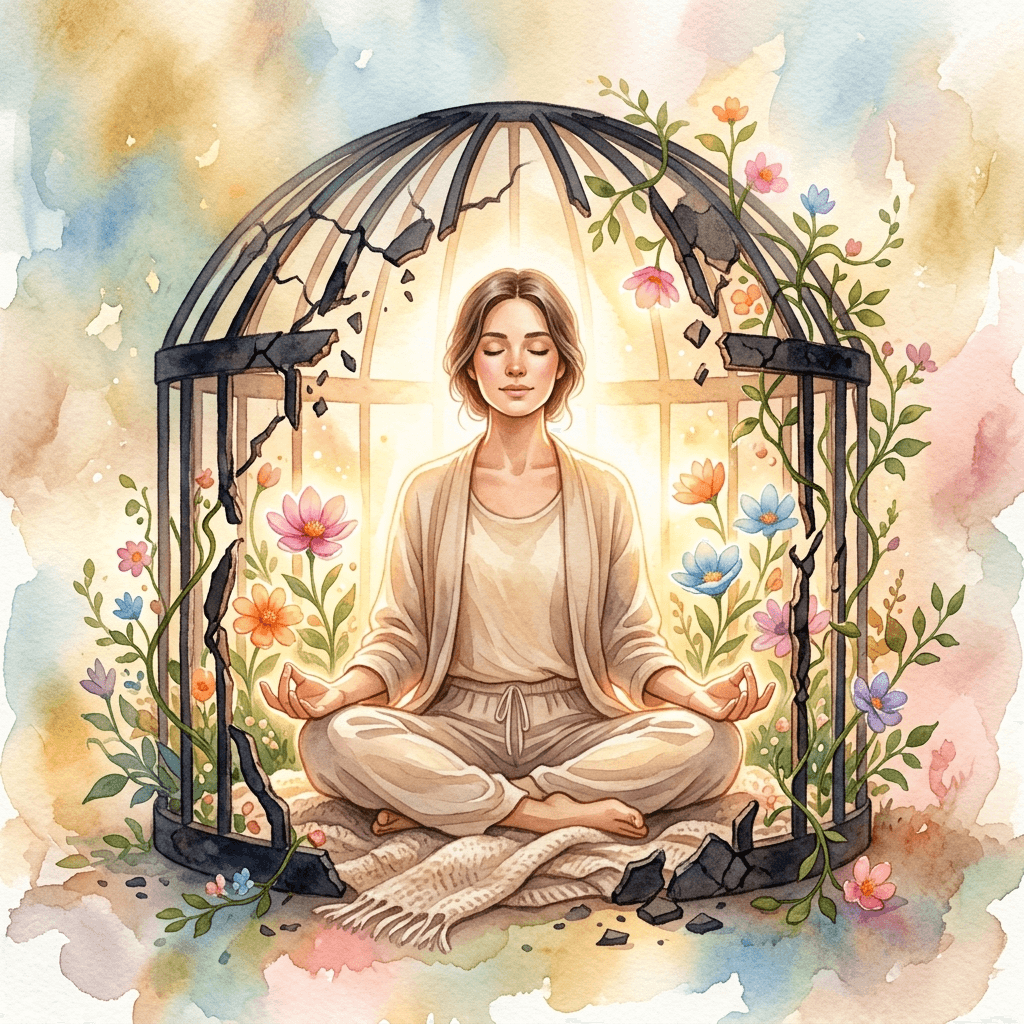
Healing from Religious Trauma: Overcoming Fear and Guilt
Understanding Religious Trauma Syndrome
Leaving a dogmatic religion is not merely an intellectual shift; it is a profound emotional and psychological upheaval. For many Iranians who have walked away from Islam, the intellectual realization that these doctrines are human-made is only the first step. The emotional residue of religious conditioning—specifically the deep-seated fears of divine punishment, eternal hell, and the persistent guilt associated with perfectly natural human behaviors—can linger for years. This psychological distress is recognized by mental health professionals as Religious Trauma Syndrome (RTS). To heal and reclaim our emotional sovereignty, we must understand the nature of this trauma and actively work to deconstruct the harmful psychological frameworks that religion has left behind.
RTS manifests in various ways, including chronic anxiety, depression, cognitive dissonance, loss of community, and a shattered sense of self-worth. In deeply religious or theocratic environments like Iran, this trauma is amplified because the state, the education system, and often the family unit act as active agents of indoctrination. From childhood, individuals are taught that their natural instincts are sinful, that their questioning minds are rebellious, and that any deviance from religious norms will result in torture in the afterlife and ostracization in this one. When a person leaves the faith, these fears do not instantly vanish. The subconscious mind, conditioned by years of fear-based narratives, continues to trigger anxiety responses even when the conscious mind no longer believes them.
The Anatomy of Fear and Guilt
To overcome the trauma, we must examine the specific mechanisms religion uses to control our psychology. The most powerful of these is the fear of hell. The imagery of fire, torture, and eternal suffering is deeply engraved in the minds of children. Even as adults, atheists often report sudden spikes of anxiety when thinking about death or when facing life's uncertainties—a direct result of this early conditioning. This is a form of psychological abuse that limits a person's ability to live freely and make decisions based on reason rather than terror.
The second mechanism is the weaponization of guilt. Dogmatic religions often pathologize normal human behaviors, particularly around sexuality, body image, and independent thought. Enjoying music, dancing, expressing love outside of rigid religious contracts, or simply desiring personal autonomy are framed as transgressions against a divine creator. This creates a state of perpetual guilt, where individuals feel constantly inadequate and under judgment. Overcoming this guilt requires a conscious process of unlearning. We must realize that these 'sins' are arbitrary social control mechanisms designed to make us dependent on religious authorities for forgiveness and validation.
Reclaiming Emotional Sovereignty
Healing from RTS requires active, intentional self-care and, when possible, the support of secular mental health professionals. The first step is to practice self-compassion. Acknowledge that the anxiety, guilt, and confusion you feel are normal reactions to a highly abnormal system of control. Do not judge yourself for feeling afraid; instead, treat yourself with the kindness that your previous religion denied you. Reclaiming your emotional sovereignty means recognizing that you are the sole owner of your body, your emotions, and your mind.
A highly effective technique in deconstructing religious trauma is cognitive reframing. When a feeling of irrational guilt or fear arises, pause and analyze it. Ask yourself: "Where does this rule come from? Is there any empirical evidence that this action is harmful? Or is this just leftover conditioning?" By bringing these subconscious fears into the light of conscious reason, you strip them of their power. Replace prayer with mindfulness, meditation, or engagement with nature. These secular practices help ground you in the present moment, reducing anxiety and fostering a deep sense of connection with the real world without the need for supernatural narratives.
Rebuilding Community and Identity
One of the hardest aspects of leaving a religious environment is the loss of social connection. For many, religion provided a ready-made community, a set of shared rituals, and a clear sense of identity. Leaving the faith can lead to a period of social isolation and existential confusion. To heal, we must actively build new, secular support networks. Connect with other freethinkers, atheists, and secular humanists. Engage in hobbies, volunteer for social causes, and participate in artistic or scientific communities where relationships are built on mutual respect and shared interests rather than dogmatic conformity.
At the same time, we must construct a new, robust identity based on our own values and passions. In a religious framework, identity is handed down from above. In a secular life, identity is built from within. Explore what truly matters to you. What are your values? What are your passions? What contribution do you want to make to the world? By finding meaning in the reality of the present life—in relationships, art, science, and the pursuit of human well-being—we fill the void left by religion with a robust, authentic purpose that is grounded in reality.
The Path to Secular Well-being
Healing is not a linear process; it takes time, patience, and effort. There will be days when the old fears resurface, and that is okay. The key is to remember that you have already taken the most difficult step: you have claimed your intellectual freedom. By choosing reason over dogma, you have given yourself the opportunity to live an authentic, self-determined life. The psychological scars will fade as you fill your life with healthy relationships, rational thinking, and meaningful experiences.
In the new, secular Iran, promoting mental health awareness and providing support for survivors of religious trauma must be an integral part of our social reconstruction. We must train therapists in secular counseling methods and create safe spaces where individuals can openly discuss their struggles with RTS without shame. By healing ourselves, we heal our society, ensuring that the next generation grows up free from the chains of fear and guilt. We are not just survivors of a system of control; we are the creators of a new culture of mental well-being and intellectual freedom.